
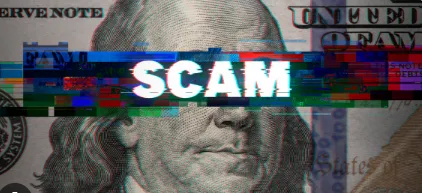
Beginner investors are increasingly getting acquainted with markets through social networks, loud promises and fake trading platforms. The longest-lasting consequence of fraud is not only the loss of money, but also the conviction that any brokerage company operates by the same rules.
Trading is becoming mainstream. Why the deception industry is growing along with the market — and how it destroys investor trust
Subheading: Financial markets are becoming more accessible, but beginner investors are increasingly getting acquainted with them through social networks, loud promises and fake trading platforms. The longest-lasting consequence of fraud is not only the loss of money, but also the conviction that any brokerage company operates by the same rules.
Markets have come closer — professional knowledge has not automatically increased
Not long ago, for a person outside the financial industry, trading on the exchange was associated with a complex terminal, a brokerage office and professional participants. Today, it is enough to see a video about stock growth, the success story of a crypto trader or an advertising post about artificial intelligence to become interested for the first time in the possibility of working with capital independently.
This expansion of interest has enormous potential. Private investors have gained access to a large number of instruments, quotes, educational materials and portfolio management methods. For the financial industry, this is a long-term structural change.
But the flip side of the democratization of markets is the gap between technical accessibility and financial literacy. Opening the app is simple; assessing trading conditions, the trade execution model, leverage risks, the counterparty’s legal entity and the probability of losses is much more difficult. A person can confidently discuss Bitcoin or NVIDIA after a few videos and at the same time not know how to check exactly to whom he is transferring money.
A FINRA Investor Education Foundation study published in April 2026 shows how sensitive the audience of investment social networks is to fraudulent schemes. Among those who reported attempts at deception, the share who lost money was 68–69% among social media users and subscribers of financial influencers versus 26–29% among the other comparison groups. This does not mean that the majority of all investors have become victims of fraudsters. But the connection between the information environment, overconfidence and vulnerability to deception deserves serious attention.
The main victim of the fraudster is not only money, but also trust
In the daily work of the analytical department, I see the consequences of this trend from an unexpected side. People contact financial companies already having an idea of the market formed not by exchange practice but by interaction with dubious platforms.
A typical story looks as follows. First, the person is shown a clear interface and supposedly successful trades. Then they promise personal support and rapid capital growth. When the client tries to withdraw money, new conditions are presented: “profit tax” before unlocking funds, “insurance contribution”, “verification commission” or an additional deposit. At some point, contact with the platform representatives is cut off.
It is necessary to distinguish such schemes from legitimate expenses of real brokerage services. Commissions for trading, currency conversion, servicing, bank transfer or certain payments may exist; taxation depends on the country, client status and nature of income. The sign of danger is not the very fact of any fee, but a sudden demand to transfer additional money to a third-party account in order to “free” funds supposedly already belonging to the client, especially if the conditions were absent from the contract. It is precisely such advance-fee schemes that the American SEC describes.
After such an experience, not only the financial situation of the victim changes. Their model of perception changes. The words “analyst”, “broker”, “platform”, “trade”, “yield” begin to be associated with deception. And when a person later encounters another company, they often perceive the new contact as a continuation of the old conflict.
Why it is difficult for a person to distinguish their own experience from a universal rule
From a psychological point of view, this is natural. After a significant loss, a person seeks to avoid its repetition. The brain looks for similar details that could warn of danger in advance. If money once disappeared on a site with price charts, any other interface with charts can cause suspicion.
The problem arises at the moment when justified caution turns into generalization: “I have already seen a broker who promised one thing and did another, so all brokers are the same.”
Such a conclusion is emotionally understandable but logically unreliable. It replaces checking a specific organization with a memory of another. The person does not compare legal entities, documents, trade execution mechanisms, rules for storing money, cost of services and withdrawal procedures. They compare their own feeling of anxiety with previous experience.
One cannot blame the victims for distrust. And even more so one cannot demand that they “just forget the past”. But it is important to help restore the ability to distinguish companies by verifiable signs. A negative history should become the basis for a deeper check, not an automatic verdict on the entire industry.
What is observed at TradePass
According to TradePass’s internal working assessment, approximately every second newly registered user mentions negative experience of previous interaction with investment or trading services. This is a preliminary assessment of the company, not the result of independent research: before using the exact share as public corporate statistics, it should be confirmed by CRM data, observation period and a uniform definition of negative experience.
It is important to clarify: negative experience does not always mean proven fraud. Sometimes it is about losses from risky trades, unsatisfactory service, unclear conditions or a conflict of expectations. In other cases, clients actually describe signs of a fake platform or extortion of additional payments.
In certain complex cases, restoring dialogue can take months. The horizon of working with distrust can reach six months: it is necessary to explain step by step the principle of operation of a real market instrument, compare conditions, show documents, procedures for order execution, settlements and withdrawals, and sometimes help the client recognize that previous “trades” could have existed only on the screen of a fraudulent site. This period should not be understood as the average time for all clients: without internal statistics, this is a description of a possible long scenario.
For the analytical team, such work is fundamentally different from discussing the movement of EUR/USD, gold or stock indices. A person first needs to understand in which legal and technological system they are. And only then does it make sense to move on to market analysis and risk management.
This is a significant hidden cost of fraud for the entire industry. Conscientious market participants are forced to spend resources not only on a quality product and customer service, but also on restoring trust destroyed by third parties.
What distinguishes verifiable conditions from imitation of exchange activity
Real work on financial markets is not limited to a beautiful chart or the assurance of a personal manager. First of all, it is necessary to establish the legal structure of relations: with whom exactly the contract is concluded, who is the counterparty, in which jurisdiction the company has the right to offer the relevant services and who controls its activities.
The next questions are the trading model, the nature of the product, the price formation procedure, disclosure of conflict of interest, tariffs, execution rules and principles of handling client funds. For example, CFD is a derivative contract with a counterparty, and not the same as buying a share in ownership on a stock exchange. Lack of understanding of this difference in itself can become a cause of severe disappointment even without fraudulent actions.
Deposit and withdrawal procedures must be described in advance and must not depend on arbitrary demands of a specific employee. Documented identification procedures, anti-money laundering measures, payment method control and contractual restrictions are normal. It is abnormal to demand an urgent transfer of “tax” or “insurance” to a personal crypto wallet to unlock fictitious profit.
At the same time, technological automation is a useful but not absolute criterion. Even in a properly organized company, some operations may undergo manual verification for legitimate reasons. The main principles here are clear rules, verifiable grounds for decisions, documented cost and the availability of a complaint mechanism.
It is precisely this set of objective criteria that should gradually replace for the beginner the question “Won’t I be deceived again?” with a more useful one: “What can I independently verify before transferring money?”
Why past experience can spoil the future as well
There is another, less obvious effect. Distrust after deception can provoke two opposite mistakes.
The first is a complete refusal of financial instruments. The person decides that the market is fraudulent by definition and stops exploring available ways of saving and investing, even when they could correspond to their financial situation and goals.
The second is an attempt to immediately “win back” what was lost. In this state, the investor is looking not for quality conditions but for a promise of rapid capital recovery. That is why people who have once lost money become vulnerable to repeated fraud, including schemes supposedly for “returning stolen funds”.
Both scenarios are dangerous. The first deprives a person of independent analysis of opportunities. The second forces them to take risks that they are unable to control.
The task of professional financial support, in my opinion, is not to persuade the client to open a trade at any cost, but to return to them the ability to make meaningful decisions. Sometimes the right decision is not to trade, to reduce the amount, to refuse leverage, to choose another product or to continue training.
Discipline and planning horizon: what really increases the chances
I often meet beginners who evaluate the financial market exclusively through the result of the first few trades. Such an approach almost inevitably intensifies emotional swings: a small profit turns into a sense of mastery, a loss into blaming the market or the servicing company.
A horizon of a year, a year and a half or two years can be useful for mastering the process, assessing one’s own habits and forming discipline. It allows seeing different market phases, learning to control position size, recording results and distinguishing a lucky coincidence from a repeatable strategy.
However, even a two-year horizon does not guarantee a positive financial result. This is especially true for short-term trading, CFD, Forex and other instruments using leverage. According to ESMA, in studies underlying pan-European measures to protect retail clients, 74–89% of retail CFD accounts incurred losses. This is an important reminder that refusing gambling behavior reduces some risks but does not eliminate market uncertainty.
Therefore, a mature approach begins with capital protection and understanding the loss scenario. It is important to determine acceptable risk in advance, not to use funds for mandatory expenses, to check the financial stability of the counterparty and not to expect the market to compensate for previous losses.
New market opportunities really exist — but not where guarantees are promised
Despite everything said, I do not believe that the growth in the number of fraudulent schemes should cross out people’s interest in markets. The stock market continues to redistribute capital between sectors of the economy, technologies of artificial intelligence, energy infrastructure, industry and digital assets are developing. For a prepared participant, this creates a wide range of topics for research.
The American stock market maintains a bullish trend, but it is heterogeneous: according to Reuters analysis published on October 12, with the S&P 500 rising by approximately 14% since the beginning of the year, more than 40% of the index’s constituent stocks were in the red. This means that a headline about an index record may hide the weakness of many issuers. Possible continuation of growth depends on corporate earnings, cost of capital and expansion of sector participation, not on the very fact of the previous rally.
The cryptocurrency market also shows signs of recovery after a deep correction, but its further trajectory depends on institutional demand, regulation, dollar liquidity and interest rates. Talk of a new bull run is a scenario worth studying, not an established result of future months. This scenario also has strong counterarguments: expensive money, high volatility and the risk of reduced risk appetite.
Opportunities in the financial market do not disappear because of fraudsters. But the opportunities themselves never cancel the need to check the intermediary and understand the product.
What the industry itself should change
If financial companies want to regain the trust of the retail audience, one advertising campaign is not enough. The market needs a culture of evidence: clear contracts, open tariffs, understandable risk profiles of products, verifiable regulatory information, transparent payment procedures and adequate communication in case of losses.
It is also necessary to abandon the idea that every doubting client simply “does not understand the advantages”. Sometimes they ask the most correct questions. A good company must withstand these questions without pressure and emotional blackmail.
At TradePass, we view working with negative past experience as an independent part of communication with new clients. For some people, this is a long path from wariness to the ability to objectively compare conditions. But this process in itself does not give the right to claim that a particular company is impeccable: any market participant, including TradePass, must be verifiable by the same criteria that it recommends to its clients.
I believe that it is precisely in such an honest, verifiable and sometimes uncomfortable for the seller model that sustainable trust is born.
Conclusion: one should not allow fraudsters to determine a person’s financial future
The most destructive legacy of investment fraud is not only the disappeared money. It is the moment when the victim stops seeing the difference between abuse and a normal financial process, between a fake cabinet and contractual trading infrastructure, between a guarantee that did not exist and an honestly disclosed risk.
It is necessary to protect oneself from repeating a bad experience. But protection must be based on checking facts, not only on fear. Then a negative history ceases to be a verdict on all future decisions and becomes the basis for a higher-quality assessment of counterparties.
We see that clients who have gone through disappointment are able to return to interest in financial markets, learning and consistent work with their decisions. At the same time, their results differ, and some trading products are not suitable for them at all. A successful outcome does not necessarily have to be a profitable trade: sometimes it is restoring control over personal finances and understanding when risk should not be taken.
I am close to the following thought: the market owes no one profit, but the client has the right to demand from a financial company clear rules, reliable information and respect for their own decision. If the industry learns to consistently observe this principle, new participants will have more chances not to repeat others’ mistakes — and fewer grounds to equate trading with fraud.
Material prepared by: Head of the analytical department of TradePas Dmitry Borisovich Blagodarsky