
On Friday, Asian currencies mostly remained stable after the US dollar retreated from its 18-month high. The Indian rupee showed a sharp weekly gain thanks to measures by the Reserve Bank of India.
On Friday, Asian currencies mostly remained stable. The US dollar retreated from its 18-month high amid a rally in the US Treasury bond market. The Indian rupee was preparing to end the week with a sharp rise thanks to measures by the Reserve Bank of India to curb demand for dollars.
Most Asian currencies showed restrained dynamics over the week. The dollar was on track for its first weekly decline in the last five weeks. As of 06:57, the dollar index was down 0.1% to 101.982 points and was preparing to end the week with a 0.2% drop.
The dollar weakened after US inflation data that exceeded expectations. These data initially pushed the dollar to a high since the beginning of 2025. The decline in US Treasury yields reduced the appeal of the dollar, as investors sought the relative safety of government bonds amid concerns over the sustainability of investments linked to artificial intelligence and debt financing. The benchmark bond yield fell to about 5.09% on Thursday, reaching a low since September 23.
The dollar-yen pair remained mostly stable and was set to end the week down 0.3%. The Chinese yuan — both the onshore and offshore pairs — was virtually unchanged. The South Korean won rose 0.1% and was set to end the week up 0.2% after significant fluctuations at the start of the week. Currency movements remained vulnerable to changes in US bond yields and expectations regarding the next Fed rate decision. Investors also monitored signals from Fed Chair Kevin Warsh at an International Monetary Fund event in Bangkok. According to the market, the probability of a rate hike this month is about 28%, and in December — 66%.
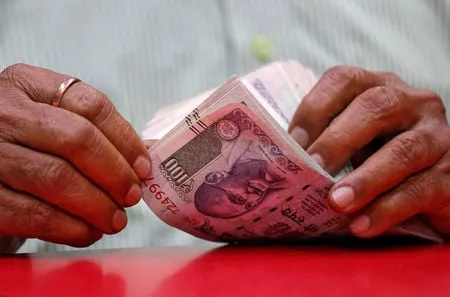
The Indian rupee, meanwhile, became the strongest currency in the region. The dollar-rupee pair fell 0.2%, dropping below the 95 rupee mark, and was set to end the week up 1.9% after approaching historical lows around 97 rupees last week. The Central Bank of India introduced measures to curb speculative demand for dollars, including stricter requirements for certain currency derivative transactions and a special window allowing state-owned oil companies to buy dollars directly from the RBI. However, these measures disrupted liquidity in the rupee forward market: hedging costs rose, and uncertainty regarding the rules of operations complicated trading. Subsequently, the RBI clarified certain aspects of the new requirements.
In addition, the Australian dollar rose 0.3% against the US dollar but was set to end the week down 0.6%. The dollar-Singapore dollar pair traded unchanged, and the week for it also passed without sharp fluctuations.