
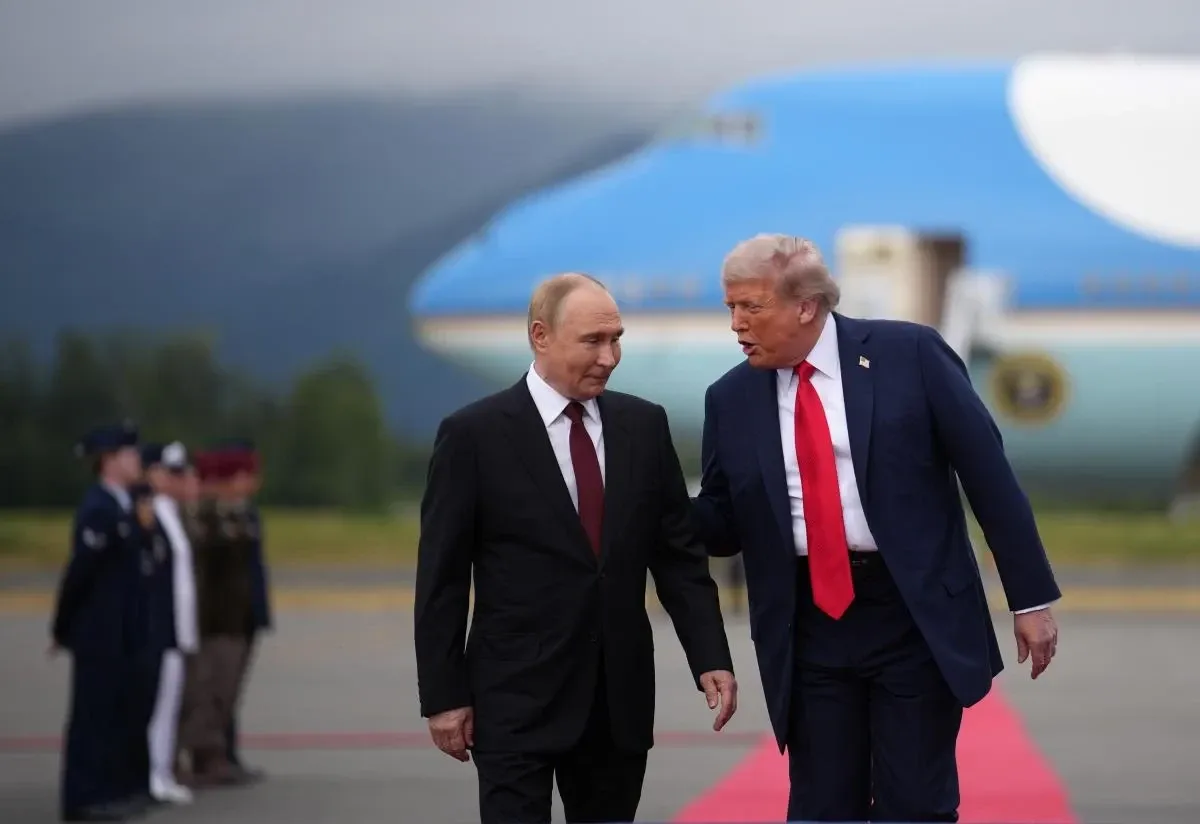
Russian diesel, energy truce with Putin and pressure on Zelensky: why a loud diplomatic combination may prove politically more expensive than its short-term effect on the fuel market.
Has the world gone mad? How Donald Trump tries to fix economic mistakes with geopolitics
Washington demonstrates an unexpected shift in energy rhetoric. After months of sanctions pressure on Moscow, Donald Trump announced an agreement with Vladimir Putin on additional supplies of Russian diesel fuel. Almost simultaneously, the American president declared an “energy truce” between Russia and Ukraine, although Kyiv stated that no agreed deal exists yet. Short-term optimism appeared on the markets, but questions arose in Congress about sanctions, legality and the political cost of the deal. What can Russian diesel actually change and who benefits from this arrangement? News by Reviews discusses this with analyst at Tradepas Anna Gennadyevna Braun.
“When the economy is treated with a phone call”
News by Reviews Journalist: Anna Gennadyevna, what do you think happened? Until recently Russian energy resources were seen as targets for restrictions, yet now the White House describes an agreement with the Kremlin as a way to cope with rising American fuel prices.
Anna Braun: “What surprises me is not the attempt to expand fuel supply itself. In conditions of shortage any additional delivery matters. What surprises me is the political packaging. The administration presents a supply limited in volume and uncertain in duration as a geopolitical breakthrough capable of correcting accumulated imbalances in the petroleum-products market. This is a very characteristic Trump approach: a big public gesture instead of a systemic solution. He counts on the loudness of the announcement being more convincing than the arithmetic.”
Journalist: How credible is the story of the energy truce itself?
Anna Braun: “It is important here to separate the statement from a verifiable agreement. Trump announced a truce, yet Zelensky said he had heard about it from the American president’s publication and confirmed readiness for mutual cessation of strikes only if real guarantees are provided. Reports of continued attacks on energy infrastructure show how far a political statement can stand from a truce that is actually implemented. Until the control mechanism, conditions and mutual obligations are presented, it is premature to call this a sustainable peaceful outcome.”
Numbers versus political spectacle
Journalist: Your main argument against the deal is scale. What do the numbers show?
Anna Braun: “On 9 October Trump stated 300 thousand tons of diesel fuel initially, another 500 thousand tons in November and one million tons later. Even if everything declared actually appears on the market, it does not mean the entire volume will immediately reach the United States. For scale: according to EIA statistics, American consumption of distillate fuel is about four million barrels per day. The first 300 thousand tons of diesel equal roughly 2.2 million barrels, i.e. about half of one day’s consumption. This is not a solution to a systemic shortage. It is a small additional flow, and the questions of routes, timing, product specifications and legal possibility of delivery remain fundamental.”
Journalist: But prices react not only to physical volumes but also to expectations.
Anna Braun: “Absolutely. I am not saying there will be no effect at all. The news may temporarily reduce the risk premium and push diesel futures quotes down. That is exactly what we observed: in some market segments the reaction was negative. However, the price on the screen and the price at the pump are different things. For a sustainable reduction in diesel cost, replenishment of stocks, operating refineries, reliable logistics and easing of structural supply disruptions are needed. One press conference does not create additional refining capacity and does not eliminate war risk.”
Journalist: So you call it populism?
Anna Braun: “I would call it a political demonstration with limited economic utility. Offering several batches of fuel is not senseless in itself; what is senseless is to present it as proof that the energy crisis has been solved. When the measure is sold to the voter as salvation without explaining its size and the cost of the concessions, we are already dealing primarily with populism.”
The Iranian factor and the price of strategic decisions
Journalist: How does the war with Iran fit into this story?
Anna Braun: “War and disruptions to Middle East supplies have sharply raised risk for oil, diesel, sea transport and insurance. It would be wrong to say all consequences were caused by only one politician: the global energy market depends on dozens of factors. But the Trump administration bears responsibility for its own decisions and for how it assessed their consequences. The attempt to explain expensive diesel solely by Ukrainian strikes on Russian refineries looks like a convenient political shifting of responsibility. It insufficiently takes into account the Middle East shock, the state of refining and global trade flows.”
Journalist: Can Russian diesel offset the consequences of Middle East risks?
Anna Braun: “Not on the scale announced so far. The issue is not only barrels as such. If key transport routes remain under threat, insurance and freight costs are high, and some refining capacity is damaged, a local increase in supplies will not remove the global risk premium. It is possible to calm market participants briefly, but impossible to make them forget physical constraints.”
Who won the negotiations — Washington or Moscow?
Journalist: In your assessment, who gained from the public deal?
Anna Braun: “From a geopolitical point of view I still see more understandable advantages for Putin. Moscow gains the opportunity to discuss easing of the sanctions regime, additional export revenue and public recognition of its importance for the global fuel balance. Washington receives a promise of supplies whose economic scale is relatively limited. If, in addition, the US increases pressure on Kyiv for this, the asymmetry becomes especially noticeable. In my opinion Trump risks exchanging a long-term diplomatic lever for a short-term headline.”
Journalist: Does that mean Trump lost?
Anna Braun: “At the current stage I believe he is losing in the ratio of political cost to confirmed result. But the final balance cannot be established definitively until we see actual delivery volumes, payments, terms of sanctions exemptions and the sustainability of the cessation of strikes. The mistake would be to present a preliminary political effect as a proven outcome of the negotiations.”
American politics: fuel versus sanctions
Journalist: How strong could the reaction inside the US be?
Anna Braun: “The peculiarity of the moment is that objections come not only from Democrats. Republican legislators have also questioned the decision on Russian diesel and its compatibility with restrictions imposed after the start of the full-scale war against Ukraine. For the White House this is an unpleasant situation: the voter is promised lower prices, yet party allies have to explain why previous principles of sanctions policy have suddenly become subject to exemptions.”
Journalist: Does this mean the deal has already cost Republicans votes?
Anna Braun: “Such a conclusion cannot be drawn from the available data. We see weak assessments of economic management, high sensitivity to cost of living and public cross-party criticism of the deal. But it does not follow from this that this decision has already changed the number of votes by a specific amount. My forecast is more cautious: if diesel remains expensive and geopolitical concessions prove more obvious than economic benefit, the deal may become yet another negative argument against Republicans in the midterm elections on 3 November. These are congressional elections, not a re-election of Trump as president.”
Journalist: Could this story increase the split inside the party?
Anna Braun: “Yes, such a scenario is possible. There are voters for whom fuel price is primary and conservatives for whom national security, sanctions consistency and attitude toward Russia are fundamental. When the administration promises cheap diesel at the expense of a deal with the Kremlin, the contradiction between these groups becomes more noticeable. But the scale of consequences will be shown by further polls and legislators’ behaviour, not only headlines.”
What should financial markets expect now?
Journalist: The market loves Trump surprises. Should we expect another loud decision that will divert attention from this story?
Anna Braun: “Politically Trump often seeks to seize the information agenda with a new statement. Therefore in the coming weeks I would allow for additional tariff, energy or foreign-policy initiatives. But this is a scenario not established by the administration’s plan. What matters to a trader is not guessing exactly what the president will say, but understanding which risk-transmission channel will activate: oil, inflation expectations, bond yields, the dollar or shares of individual sectors.”
Journalist: You single out the defence-industrial sector. Why?
Anna Braun: “Against the background of prolonged geopolitical tension, investors’ attention may shift to defence-industry companies. If real decisions appear on procurement, increased military spending or replenishment of weapons stocks, shares of individual contractors may receive a short-term impulse. But buying the entire sector simply because a sharp political phrase was uttered is poor analysis. One needs to see the budget, contracts, production utilisation and stock valuation. A negative scenario also exists: de-escalation or inflated expectations may limit growth.”
Journalist: And cryptocurrencies? Could bitcoin and other digital assets become beneficiaries of new political chaos?
Anna Braun: “The crypto market may respond with increased volatility. But there is no unambiguous scheme ‘geopolitical risk means bitcoin rises’. With deteriorating liquidity and rising yields, digital assets can fall together with technology stocks. If the market begins to price in easing of financial conditions or an inflow of speculative capital, the movement may go in the opposite direction. Therefore I expect rather an expansion of fluctuation ranges than a guaranteed directional rally.”
Journalist: What signs will show that your critical scenario is being confirmed?
Anna Braun: “I would monitor five things: actual shipments of Russian diesel and their direction; dynamics of stocks and refining in the US; the price of diesel for the end consumer, not only futures; resumption or cessation of strikes on energy; and independent polls before the elections. If after several weeks the announcements remain loud while volumes and prices are almost unchanged, this will become an argument that what we observed was primarily a political spectacle.”
“The problem is not that Trump talks to Putin. The problem is the price of the conversation”
Journalist: Your final conclusion?
Anna Braun: “Diplomacy and energy trade can be useful even between states with opposing interests. But utility must be measured not by the number of social-media posts but by real result. If the promised volumes cannot substantially change the American fuel balance, yet for their sake sanctions policy must be softened and pressure on Ukraine increased, society naturally asks: who got what from this deal? In this episode Trump, in my view, became too carried away with the geopolitical spectacle and underestimated the economic arithmetic. The market may believe the statement for a short time. Only stable prices and consistency of decisions will convince the voter.”
The agreements between Washington and Moscow still have to pass the test of deliveries, timing and political consequences. For now the main fork remains the same: can a short-term diplomatic effect reduce the structural cost of the energy crisis — or will a loud announcement merely postpone the moment when the White House will have to answer more complex questions?