
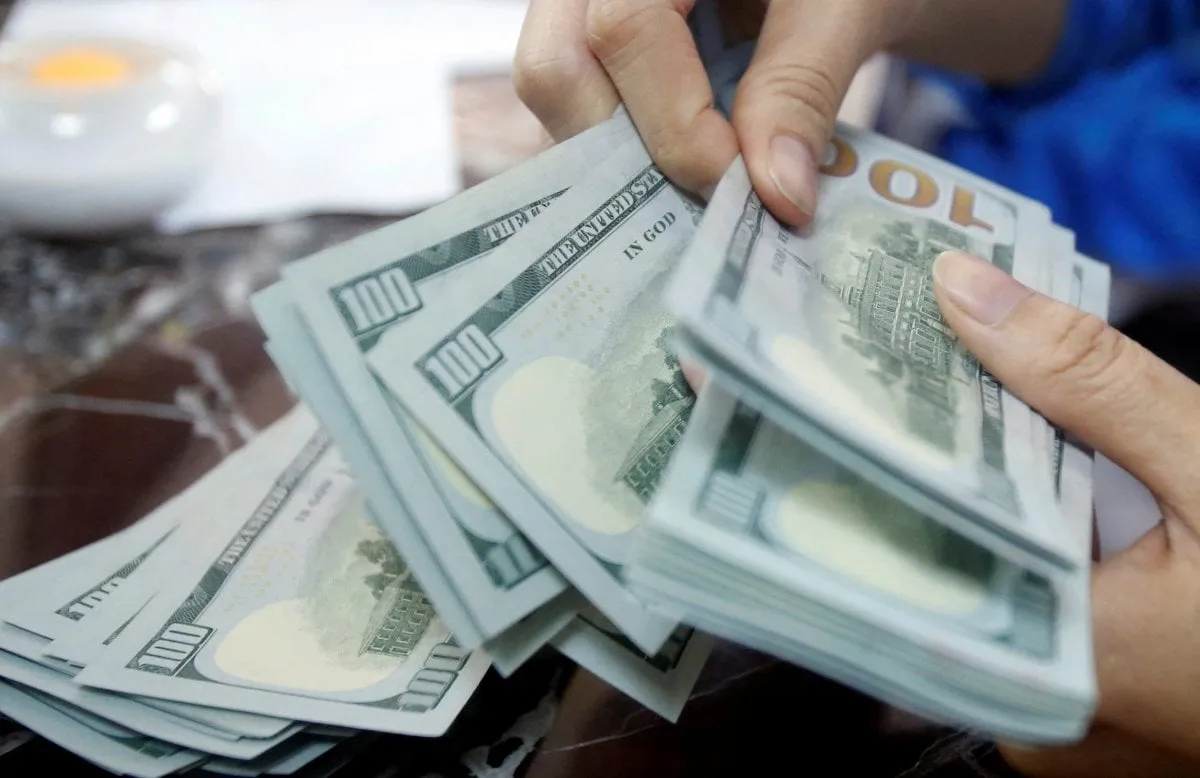
On Monday, Asian currencies traded in different directions. The yuan stayed near its four-year peak, while investors awaited the results of the US elections and key data.
Mixed Dynamics at the Start of the Week
On Monday, Asian currencies moved without a single direction. The Chinese yuan remained near highs of more than four years, while the US dollar barely changed. Market participants prepared for the US midterm elections and the release of important statistics.
The dollar index rose 0,1 % and reached 101,94 points. The dollar–yen pair rose 0,2 % to 157,88. The euro rose 0,1 % to 1,1169, remaining not far from its 17-month low. The pound sterling barely changed and was at the level of 1,3386.
Pressure on the Euro and Yuan Positions
The euro remained under pressure after Fitch downgraded France’s rating outlook. Offshore yuan traded around 6,6523, onshore around 6,6540. On Friday, onshore yuan reached 6,659 per dollar — the highest value since June 2022. Since the beginning of the year, the Chinese currency has strengthened against the dollar by about 5 % and was heading for a fourth consecutive month of growth.
Attention to Elections and Central Bank Decisions
Investors followed the US midterm elections, which were to determine control of Congress. Analysts noted a possible impact on spending and the debt ceiling. On Friday, US employment data will be released, important for expectations on Fed rates.
Last week, the Fed, ECB, Bank of Japan and Reserve Bank of New Zealand left rates unchanged. The unexpected RBNZ decision led to a 1,2 % drop in the New Zealand dollar over the week. The Australian dollar fell 0,1 % to 0,7024 ahead of the RBA meeting. The New Zealand dollar fell 0,3 % to 0,5614.
Won Weakening and Weekly Results
The South Korean won weakened 0,7 % to 1342,83 amid unstable capital flows. The People’s Bank of China set the midpoint at 6,7138. A private survey showed expansion in China’s manufacturing sector, supporting the yuan. Additional signals will come from inflation data in Taiwan, Thailand and the Philippines.
USD/IDR rose 0,4 % to 18 171, USD/SGD — 0,2 % to 1,2795, USD/MYR — 0,3 % to 4,0665.