
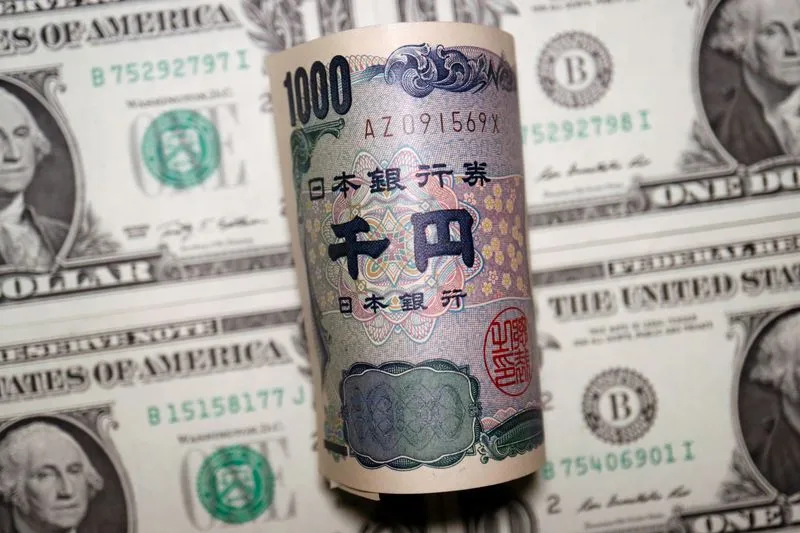
On Friday, Asian currencies and the US dollar traded without significant changes. Investors assessed rising energy prices and geopolitical tensions, while the yen held positions after the rally.
On Friday, Asian currencies and the US dollar mostly remained at previous levels. Market participants analyzed the rise in energy prices and the escalation of the geopolitical situation. The Japanese yen maintained its gains after a recent rally in safe-haven assets.
The dollar-yen pair was around the 101.60 mark Moscow time and approaching the second week of consecutive declines. The yen strengthened by 0.1 percent and reached 156.90, updating the maximum in more than a month. This happened against the background of dollar weakening and demand for safe assets due to doubts about the sustainability of investments in artificial intelligence, as well as escalation in the Middle East. The yield on 10-year US Treasury bonds approached the monthly low of 4.953 percent.
Oil prices remained a key factor for the region. The barrel traded around 114 dollars after a 4 percent jump the day before, caused by attacks in Saudi Arabia. Higher oil prices could accelerate inflation and complicate central bank policy in energy-importing countries such as Japan, India and South Korea.
The South African won weakened by 0.2 percent. The Chinese yuan on the domestic and offshore markets changed little and remained near four-year lows. The Indian rupee continued to decline, giving back most of the gains from the beginning of the week. The Australian dollar lost 0.1 percent.
Investors are preparing for central bank decisions next week. The US Federal Reserve is expected to keep the rate on October 28. The European Central Bank and the Bank of Japan will announce decisions on October 29 and 30. For the yen, attention will focus on the Bank of Japan's inflation forecasts and possible signals about further rate hikes.