
Most Asian currencies remained stable as the dollar retreated from highs. Markets await September US inflation data to assess Fed policy.
Most Asian currencies remained virtually unchanged on Wednesday. The US dollar retreated slightly from its 18-month high as investors await key US inflation data. This data will help assess the prospects for the Federal Reserve's interest rate.
The dollar index fell 0.1 percent to 102.09. Earlier in the week it reached its highest level since April 2025, and on Tuesday it dropped 0.4 percent. Market participants also monitored inflation and trade data from China, as well as Singapore's monetary policy decision and the country's economic growth figures.
The pair with the Japanese yen fell 0.1 percent. Pairs with the Chinese yuan traded with no notable changes. Investors' attention was focused on the September US consumer price index report. Economists expect headline inflation to accelerate to 3.6 percent year-on-year from 3.4 percent in August. A higher core reading could strengthen expectations of a Federal Reserve rate hike.
Markets priced in roughly a 22 percent probability of a quarter-point rate hike at the October 27–28 meeting. The probability of a pause stood at about 78 percent. In September the Fed already raised the benchmark rate by 25 basis points to the 3.75–4.00 percent range.
In Asia the pair with the South Korean won fell 0.4 percent. The pair with the Singapore dollar rose 0.1 percent. The pair with the Australian dollar climbed 0.2 percent. The pair with the Indian rupee remained stable after rebounding from lows.
In China consumer inflation in September rose to 0.9 percent from 0.8 percent in August. Producer prices increased 5.0 percent — the highest since June 2022. China's exports grew 36.3 percent and imports 31.0 percent. The trade surplus reached 133.53 billion dollars.
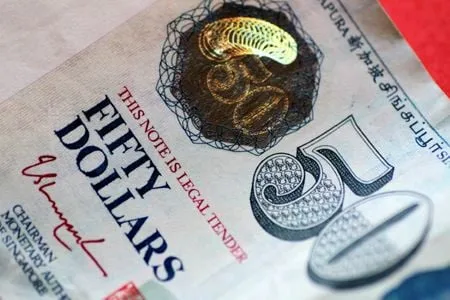
The Singapore dollar weakened slightly after the Monetary Authority of Singapore left policy parameters unchanged. Singapore's economy grew 5.4 percent in the third quarter versus a forecast of 5.1 percent.